
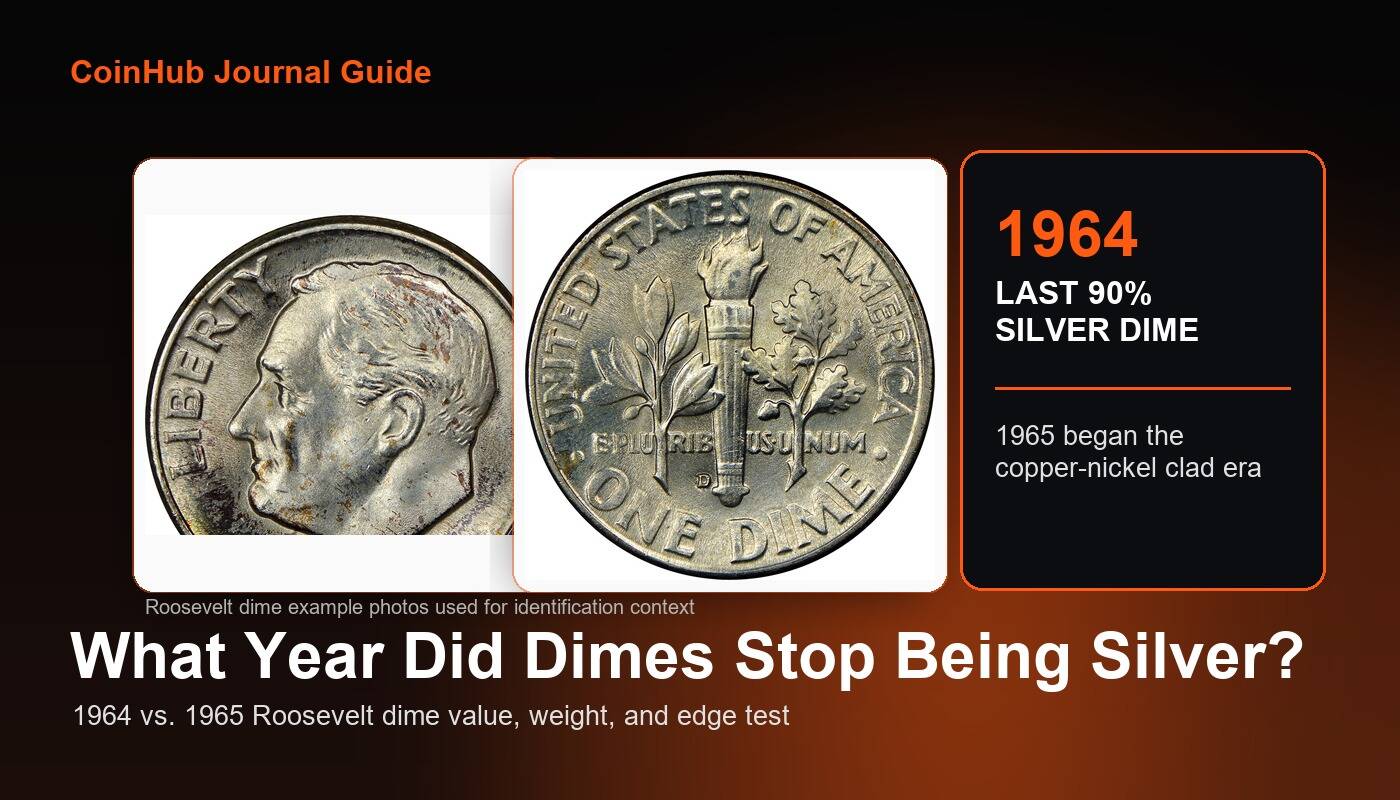
1964 vs. 1965 Dimes: The Silver Cutoff Year
U.S. dimes stopped being 90% silver for regular circulation after 1964. A Roosevelt dime dated 1964 or earlier is silver, while a normal 1965 or newer circulation dime is copper-nickel clad and usually worth face value unless it is a true error or a high-grade collector coin.
If you are checking a jar of pocket change, the fastest silver-dime test is the date. Barber dimes, Mercury dimes, and Roosevelt dimes dated 1964 or earlier were struck for circulation in 90% silver. Regular circulation Roosevelt dimes dated 1965 and later are not silver.
The reason collectors search this question so often is simple: a silver dime looks almost the same size as a modern dime, but the metal value is completely different. As of this writing, NGC's silver melt table listed a 1946-1964 Roosevelt dime at about $5.39 in silver value, compared with 10 cents for a normal clad dime. That number moves with the silver market, but the cutoff year does not change.
What year are dimes silver?
For U.S. dimes, the main rule is easy: 1964 and older circulation dimes are silver. That includes Barber dimes from 1892 to 1916, Mercury dimes from 1916 to 1945, and Roosevelt dimes from 1946 to 1964.
Starting with 1965-dated dimes, the Mint moved to the copper-nickel clad construction used in normal pocket change today. The U.S. Mint's own historical release from the changeover period describes the new non-silver dime as having cupronickel faces clad to a pure copper core. In plain collector language, that is the copper stripe you usually see on the edge of a modern dime.
| Dime type | Silver? | Typical metal clue | Collector note |
|---|---|---|---|
| Barber dime, 1892-1916 | Yes, 90% silver | Older design, silver edge, 2.5 g | Common dates have melt value; better dates can be much higher. |
| Mercury dime, 1916-1945 | Yes, 90% silver | Winged Liberty Head design, 2.5 g | 1916-D and some better dates need authentication. |
| Roosevelt dime, 1946-1964 | Yes, 90% silver | Roosevelt portrait, silver edge, 2.5 g | Most circulated examples trade close to melt, but grade and Full Bands matter. |
| Roosevelt dime, 1965-date | No, normally clad | Copper-nickel clad, 2.268 g, copper edge stripe | Usually face value unless high grade, proof, variety, or genuine error. |
How to tell if a dime is silver
Are 1965 dimes silver?
Normal 1965 dimes are not silver. They are copper-nickel clad, and most circulated 1965 dimes are worth 10 cents. The year matters because 1965 is the first regular clad Roosevelt dime date, not the last silver date.
There is one important exception collectors talk about: a genuine transitional error, such as a 1965 dime struck on a leftover silver planchet. That is not a normal coin jar find to assume from a photo. A real silver-planchet 1965 dime should weigh about 2.5 grams and needs professional authentication. Most "silver 1965 dime" claims turn out to be lighting, plating, toning, environmental damage, or confusion with the edge.
What is a 1964 silver dime worth today?
A common circulated 1964 Roosevelt dime is usually valued mainly for its silver content. NGC's melt table on May 28, 2026 listed Roosevelt dimes from 1946-1964 as 90% silver with about 0.0723 troy ounce of silver and a melt value around $5.39. Actual buy and sell prices can be lower or higher depending on dealer spread, silver movement, quantity, and local demand.
Collector value can exceed melt when the coin has a better date, strong strike, attractive toning, proof finish, or a high certified grade. For Roosevelt dimes, "Full Bands" or "Full Torch" style strike designations can matter in higher grades. For most ordinary circulated 1964 dimes, though, the silver value is the main reason people save them.
Common mistakes with silver dimes
The biggest mistake is assuming every older-looking dime is rare. Many 1964 Roosevelt dimes were saved because people understood silver was leaving circulation. They are worth keeping, but most are not rare in circulated condition.
The second mistake is believing every unusual modern dime is a valuable mint error. A brown edge, missing shine, odd color, or light weight can come from damage, acid, heat, plating, dryer wear, or corrosion. True off-metal and wrong-planchet dime errors exist, but the coin should be weighed, photographed clearly, and authenticated before anyone pays serious money.
The third mistake is ignoring older dime series. A 1916-D Mercury dime, certain Barber dime dates, and high-grade examples can be worth far more than melt. If your dime is not a common Roosevelt, slow down and check the date, mint mark, and grade before selling it as scrap silver.
Should you sell silver dimes as junk silver?
Common circulated silver dimes are often sold in groups as "junk silver" or 90% silver. That term does not mean the coins are worthless; it means the value is tied mainly to their silver content rather than individual numismatic rarity.
Before selling, separate anything with a key date, obvious variety, proof-like finish, or unusually high grade. A tube of ordinary 1964 Roosevelt dimes can be treated like bullion, but a better-date Barber or Mercury dime deserves a second look.
CoinHub tip: If you only remember one rule, remember this: 1964 and older dimes are silver, 1965 and newer dimes are normally clad. Then verify with weight before making a big value claim. The scale is often where viral coin stories meet reality.