
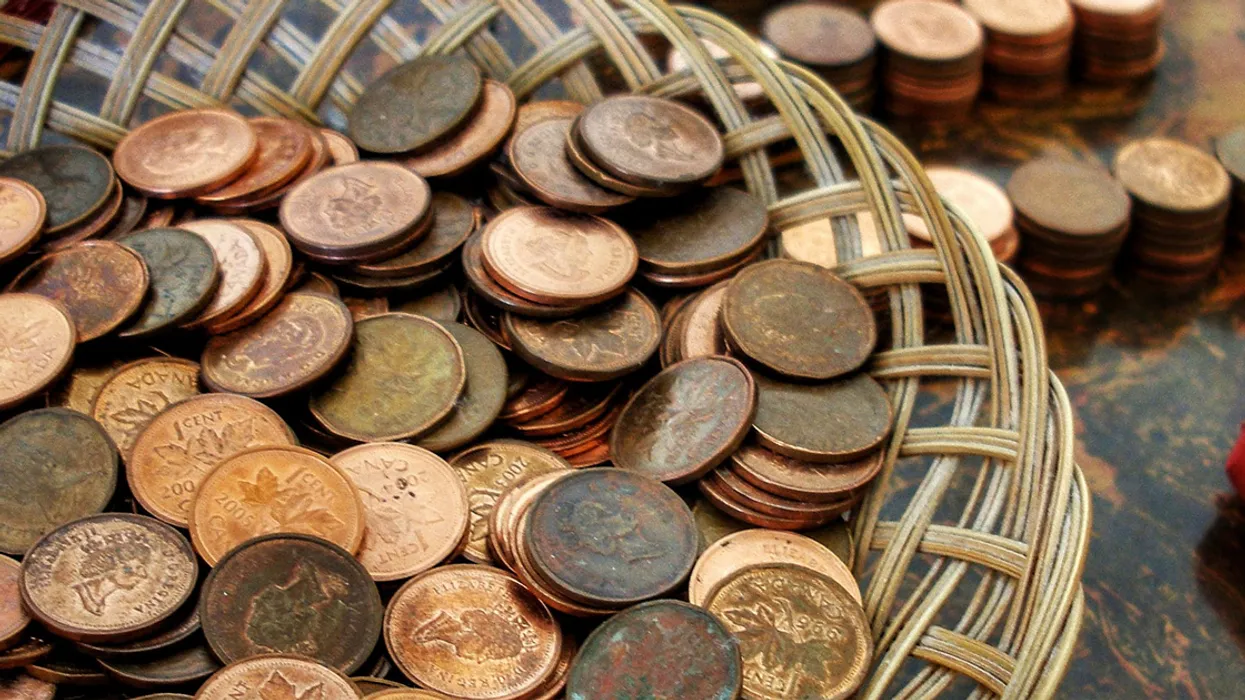
Canadian Pennies Every Collector Should Know About
Minting errors can occur on any Canadian penny. Certain years and designs are especially susceptible to specific minting flaws. Here are some notable errors (among others) to watch out for.
Errors:
- 1920 "Double Date": The date appears doubled due to a die error, making the numbers look blurry or shadowed.
- 1936 "Dot" Penny: A small dot was added to the die of some 1936 pennies, marking a transition in the monarchy. These are extremely rare.
- 1955 "No Shoulder Fold (NSF)": Differences in the shoulder fold of Queen Elizabeth II's portrait distinguish the NSF variety from others.
- 1962 "Hanging 2": A die clash error results in an extra piece of metal hanging off the number 2 in the date.
- 1965 "Pointed 5": Variations in the design of the number 5 in the date; the "Pointed 5" is less common than the "Blunt 5."
- 1973 "Large Bust": The Queen’s bust is larger compared to the regular issue, due to a mismatch in obverse dies.
- 1983 "Near Bead": The beads close to the rim are closer than in the standard design, making for a unique variation.
- 1991 "No Mint Mark": Most Canadian pennies have a mint mark, but some 1991 issues accidentally left it out.
- 2006 "P" Magnetic Penny: A small "P" under the Queen's portrait and its magnetic properties due to a steel core make it distinctive.
- 2006 "Double Date": The date appears doubled, a result of a minting error that makes these coins particularly rare.