
What the 2026 Mint Production Surge Means for Collectors
Why April 2026 Stands Out
The United States Mint's April 2026 circulating coin report gave collectors one of the clearest signs yet that the 250th anniversary coin program is no longer just a product schedule. According to production figures summarized by CoinNews and based on U.S. Mint data, the Mint struck more than 1.16 billion circulating-quality coins in April. That was more than double the combined total from January through March and marked the Mint's first billion-coin month since 2023.
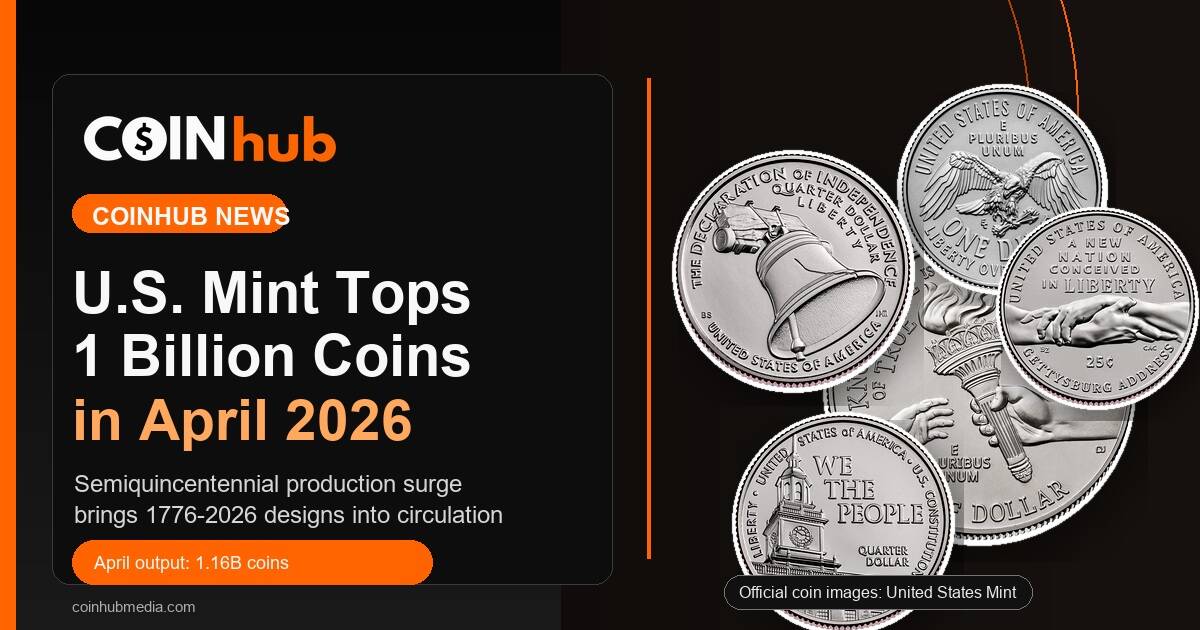
The scale matters because 2026 is not an ordinary circulating coin year. The Mint is using the nation's Semiquincentennial to place one-year-only designs into everyday coinage. Dimes, quarters, and half dollars all received special 1776-2026 anniversary designs, and the nickel carries the dual date even though the familiar Monticello reverse continues. This means April's production surge was not only about making more coins. It was also about pushing the anniversary coin designs into the banking system in serious volume.
The Missing Cent Makes the Number More Interesting
In many past high-production months, the Lincoln cent carried a huge share of the Mint's output. That is not the case here. The U.S. Mint stopped producing cents for circulation in 2025, with cents now appearing for collector products rather than normal circulating output. So when April 2026 crossed the billion-coin mark, it did so without the denomination that historically helped inflate monthly totals.
That makes the report more meaningful for pocket-change collectors. The production was concentrated in nickels, dimes, quarters, half dollars, and Native American dollars. In April alone, CoinNews reported 385.86 million Jefferson nickels, 282 million Emerging Liberty dimes, 448.6 million quarters, 40.6 million Enduring Liberty half dollars, and 5.48 million Native American dollars. The biggest collector focus will likely be the quarters and halves, because those designs are visually new and easy for non-specialists to notice.
Which 1776-2026 Coins Should Collectors Watch?
The most visible part of the 2026 rollout is the five-quarter Semiquincentennial series. The U.S. Mint's program includes quarters honoring the Mayflower Compact, the Revolutionary War, the Declaration of Independence, the U.S. Constitution, and the Gettysburg Address. By the April report, the Mint had already reported production for the early designs and the first output for later quarter themes, including the U.S. Constitution and Gettysburg Address quarters.
The Declaration of Independence quarter is especially timely because the Mint announced that shipments to the Federal Reserve for distribution to banks would begin on June 1, 2026. That coin features Thomas Jefferson on the obverse and a Liberty Bell design on the reverse. For collectors, this means fresh bank rolls and ordinary change could start showing a wider mix of 1776-2026 quarters as summer progresses.
The 2026 half dollar is also worth watching. The Enduring Liberty half dollar replaces the long-running Kennedy half dollar design for the anniversary year, and April's reported half dollar output exceeded the combined January-through-March additions. Through April, reported 2026 half dollar production totaled 70 million pieces across Philadelphia and Denver. Half dollars do not circulate like quarters, but when a design year is unusual, collectors often pay more attention to rolls, bank finds, and early uncirculated examples.
High Production Does Not Mean No Collector Interest
A billion-coin month can sound like bad news for rarity. In most cases, high production does mean ordinary circulated examples should not be treated as scarce. Collectors should be careful about hype, especially on social media posts that imply every 1776-2026 coin is automatically valuable. Most examples found in change will likely be worth face value unless they are in unusually high grade, come from a desirable roll, show a confirmed variety, or develop a real market following.
At the same time, high production does not make the coins unimportant. Bicentennial quarters from 1976 are common, but they remain one of the most recognized modern U.S. coin designs because Americans actually saw them in circulation. The same could happen with the 2026 Semiquincentennial coins. A common coin can still become a gateway collectible, especially when it marks a major national anniversary and has designs that people can identify without a price guide.
What This Means for Pocket-Change Hunting
The practical move is simple: start looking, but stay grounded. Check change from stores. Ask banks whether they have new quarter or half dollar rolls. Save clean examples of each design from both Philadelphia and Denver when possible. For quarters, try to build a simple set by design and mint mark. For half dollars, watch for fresh rolls because many people never see modern halves in day-to-day transactions.
Condition will matter more than the headline mintage. A clean, sharply struck, uncirculated coin is more appealing than a scratched coin pulled from circulation months later. If a coin looks unusual, compare it to official Mint images before assuming it is an error. True mint errors and varieties need careful confirmation, and most minor marks are simply damage from handling, counting machines, or bags.
The Bottom Line
April's production surge is one of the bigger U.S. Mint stories of the 2026 anniversary year because it shows the Semiquincentennial coin program reaching scale. Collectors should not assume instant rarity, but they also should not ignore the moment. The 1776-2026 coins are a major circulating design event, and the April numbers suggest there will be plenty of chances for everyday collectors to find them without paying large premiums.