
Eisenhower Dollar Key Dates, Silver Issues, and Valuable Varieties
Why Eisenhower Dollars Are Worth Checking
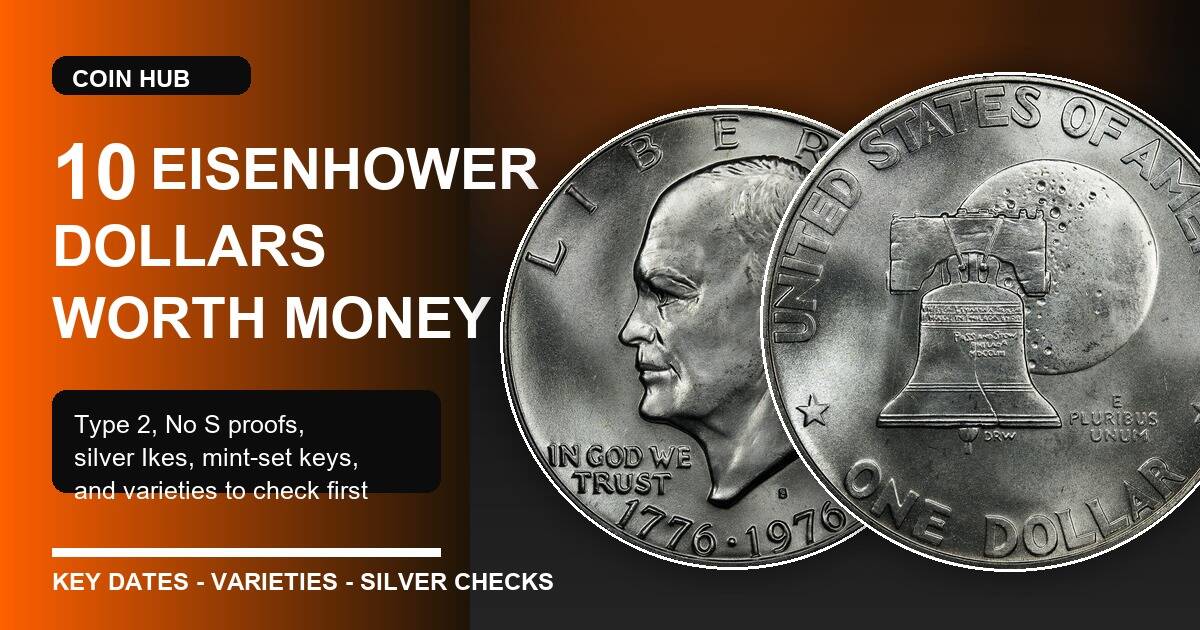
The Eisenhower dollar, often called the Ike dollar, was made from 1971 through 1978. The obverse honors Dwight D. Eisenhower, while the regular reverse pays tribute to the Apollo 11 moon landing. Bicentennial dollars carry the dual date 1776-1976 and use the Liberty Bell and moon reverse.
Common circulated clad Ikes often trade close to face value or a small collector premium, but the series has several better pieces. Some are rare proofs, some are 40% silver collector coins, and others are varieties that only show up if you know exactly where to look.
- 1976 No S Type 2 Silver Proof Eisenhower Dollar: This is the heavyweight rarity of the series. It is a Bicentennial silver proof dollar without the normal S mint mark. PCGS lists a mintage of one known example, so collectors should treat any claim carefully and require professional authentication.
- 1972 Philadelphia Type 2 Reverse: The 1972 Type 2 reverse is the key circulation-strike variety most Ike collectors learn first. The earth on the reverse has a different shape and island detail than the more common Type 1 and Type 3 reverses. Nice Mint State examples can bring strong money.
- 1971-D Friendly Eagle FS-901: This Denver variety has a different reverse style, including the well-known “friendly” eagle look. It is popular with specialists because it is a real Cherrypicker-style variety hiding among ordinary-looking 1971-D dollars.
- 1971-S Silver Peg Leg FS-401: On the Peg Leg variety, the lower serif on the R in LIBERTY is weak or missing. This is one of the classic Ike varieties, especially when certified and clearly attributed.
- 1972-S Silver Doubled Die Obverse FS-101 Proof: This 40% silver San Francisco proof variety is worth checking for doubling on the obverse lettering and date. Cameo and Deep Cameo examples are especially desirable.
- 1973 Philadelphia Eisenhower Dollar: The 1973 Philadelphia Ike was not released for regular circulation. It came from mint-set production and has a much smaller mintage than the big 1971 and 1972 circulation issues. High-grade pieces are the ones to watch.
- 1973-D Eisenhower Dollar: Like the 1973 Philadelphia coin, the 1973-D is a lower-mintage mint-set issue. It is not automatically rare in average condition, but certified high-grade examples can be surprisingly strong.
- 1973-S Silver Proof Eisenhower Dollar: The 1973-S silver proof has a lower mintage than many other proof Ike dollars. Because it is 40% silver, it has melt value support, but the real premium is in clean, certified Deep Cameo coins.
- 1976-D Type 1 Bicentennial Eisenhower Dollar: Type 1 Bicentennial dollars have heavier, blockier reverse lettering. The Denver Type 1 is common overall, but very high-grade pieces and attractive certified examples can stand out.
- 1976-S Silver Bicentennial Proof Eisenhower Dollar: Most are common, but they are still 40% silver and popular as Bicentennial coins. Top-grade proof examples, especially with strong contrast, can bring more than ordinary raw pieces.
How To Tell Clad From Silver Ikes
Most Ike dollars made for circulation are copper-nickel clad. The 40% silver collector issues were struck at San Francisco and normally carry an S mint mark. A silver Ike also weighs more: about 24.6 grams compared with about 22.7 grams for a clad circulation strike.
Do not assume every large Eisenhower dollar is silver. Many 1776-1976 Bicentennial dollars are clad, and most worn Ikes are common unless they are a recognized variety or unusually high grade.
What To Check Before Selling
Start with the date and mint mark, then inspect the reverse type. For 1972 Philadelphia dollars, compare the earth details carefully. For 1971-D Friendly Eagle pieces, study the eagle and earth design. For Peg Leg Ikes, check the R in LIBERTY. For silver proofs and high-grade coins, haze, hairlines, fingerprints, and packaging damage can make a big difference.