
Understanding the 1976 Quarter Value: A Comprehensive Guide
The 1976 Bicentennial Washington Quarter is a coin that many collectors and enthusiasts find intriguing. This guide provides detailed information on the value of the 1976 quarter, factors that affect its value, and how to determine if you have a valuable coin.
What is the Value of a 1976 Quarter?
The value of a 1976 Bicentennial Washington Quarter can vary significantly based on its condition, mint mark, and any unique features it may possess. Generally, these quarters are worth more than their face value due to their age, historical significance, and collectible status.
Factors Affecting the Value of a 1976 Quarter
1. Condition and Grading
Impact: The condition of a coin is paramount in determining its value. Coins are graded on a scale from Poor (P-1) to Perfect Uncirculated (MS-70). A 1976 quarter in mint condition can be worth significantly more than one that has been in circulation.
High Grades: Coins graded MS-65 or higher can be worth considerably more, often fetching prices from $5 to $50.
2. Mint Mark
Impact: The presence of a mint mark can affect a coin's value. The 1976 Bicentennial Quarters were minted in Philadelphia (no mint mark), Denver (D), and San Francisco (S).
Rarity: Coins from the San Francisco mint, especially those in proof condition, are generally more valuable due to their lower mintage numbers.
3. Bicentennial Design
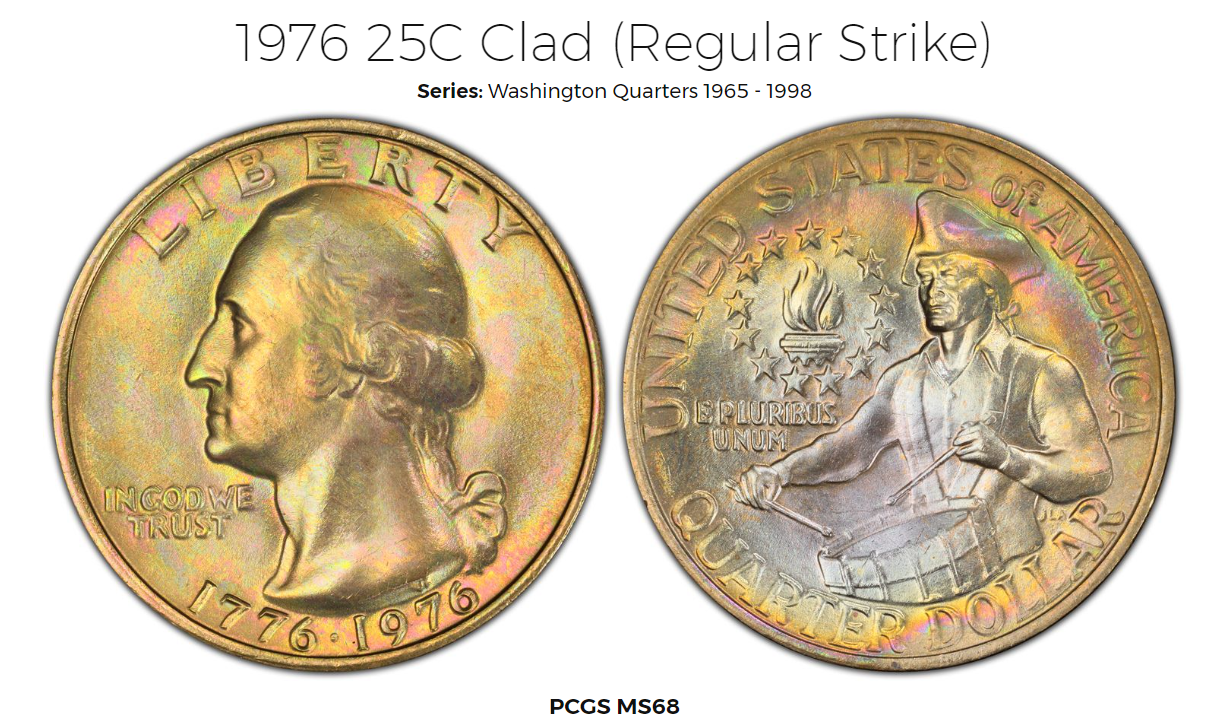
Impact: The 1976 quarter features a unique Bicentennial design with a dual date (1776-1976) on the obverse and a special drummer boy design on the reverse. This unique feature makes it more desirable among collectors and can enhance the coin's value.
4. Silver Content
Impact: Some 1976 quarters were minted in a 40% silver composition, which gives them intrinsic value based on the current silver spot price. This makes these particular coins more valuable than their clad counterparts.
5. Errors and Varieties
Impact: Mint errors and unique varieties can add significant value to a coin. Look for errors like double die, off-center strikes, and repunched mint marks.
Examples: A double die error can increase the value of a 1976 quarter to several hundred dollars.
How to Determine the Value of Your 1976 Quarter
- Inspect the Coin: Check for visible wear, mint marks, and any noticeable errors.
- Use a Magnifying Glass: To spot small errors or varieties.
- Refer to a Grading Guide: Use resources like the NGC Coin Explorer to compare your coin.
- Consult a Professional: If you suspect your coin is valuable, have it appraised by a professional.
Frequently Asked Questions
Q1: How much is a 1976 quarter worth in circulated condition?
A1: In circulated condition, a 1976 quarter is typically worth between $1.50 and $3.00. Higher-grade coins can be worth more.
Q2: What are the most valuable 1976 quarters?
A2: The most valuable 1976 quarters are those in mint state (MS-65 or higher), coins with mint errors, and coins with the San Francisco mint mark, especially those with silver content.
Q3: Where can I sell my 1976 quarter?
A3: You can sell your 1976 quarter at coin shops, online marketplaces, auctions, or through dealers. Check out our live coin auctions on Whatnot for opportunities.
Q4: Are there any special features to look for in a 1976 quarter?
A4: Yes, look for errors like double die, off-center strikes, and repunched mint marks. These features can significantly increase the coin's value. For more detailed information, refer to our best-selling coin error book on Amazon.