
2000-P Sacagawea Wounded Eagle Value and FS-901 Diagnostics
What Is the 2000-P Wounded Eagle Sacagawea Dollar?
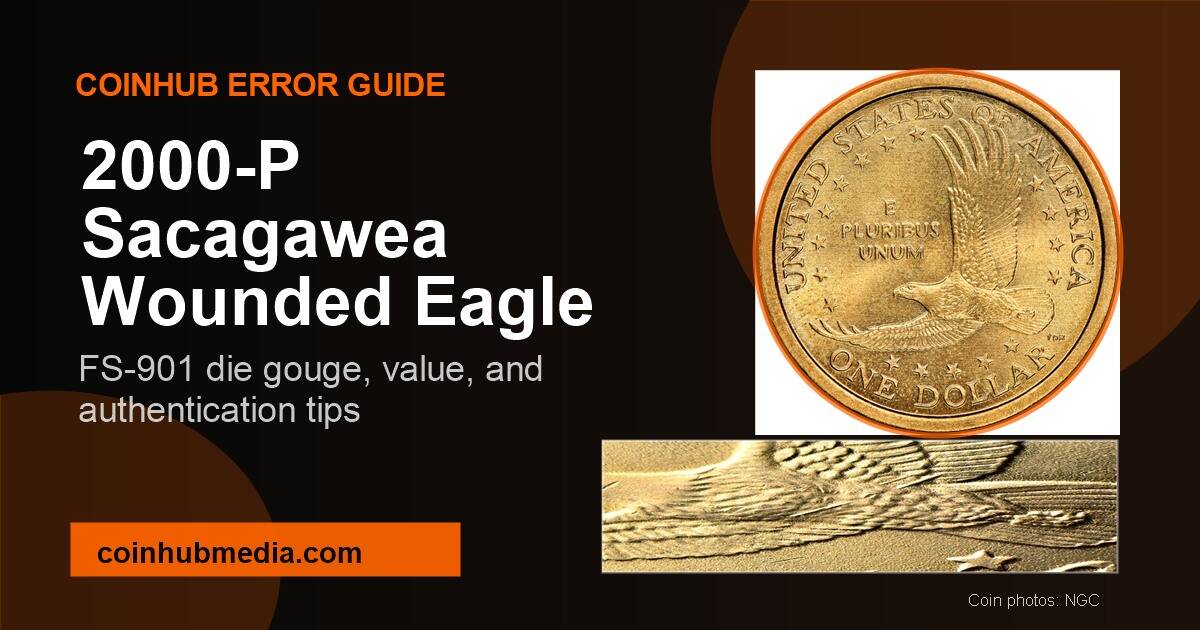
The Wounded Eagle is a collectible variety of the first-year Sacagawea dollar. It is not a separate design, not a gold coin, and not the famous quarter-dollar mule. It is a normal 2000-P Sacagawea dollar that was struck from a reverse die with distinctive raised die-gouge lines crossing the eagle.
PCGS identifies the variety as the 2000-P SAC$1 Wounded Eagle, FS-901. NGC describes the same variety as the 2000-P Speared Eagle and notes that the nickname comes from a pair of die gouges running diagonally across the eagle's breast. Collectors use both names, but the idea is the same: the "wound" is part of the die, so it appears as raised metal on coins struck from that die.
That raised-metal detail is the key. A coin can have scratches across the eagle and still be worth only face value. The real Wounded Eagle should show raised lines that look like extra metal on top of the design, not cuts dug into the surface after the coin left the Mint.
How To Identify the Real FS-901 Error
Start by confirming the coin is a 2000-P Sacagawea dollar. The date and P mint mark are on the obverse. Then flip the coin to the reverse and inspect the eagle under bright light. The best area to study is the eagle's lower breast and belly, near the wing and tail-feather area.
- Look for raised lines. The correct diagnostic is raised die-gouge metal, not an incuse scratch.
- Check the direction. The main lines run diagonally across the eagle, giving the visual effect of a spear or wound.
- Use magnification. A 5x to 10x loupe or clear phone macro photo can help separate raised die marks from surface damage.
- Compare to certified examples. PCGS and NGC photos are the safest reference points because online marketplace photos often label damaged coins as errors.
If the line is dark, sharp, sunken, or interrupts the surface like a cut, be careful. That is usually a scratch, not the Wounded Eagle variety. If the mark is raised, matches the known location, and the coin has no obvious damage explaining it, the coin deserves a closer look.
What Is a 2000-P Wounded Eagle Worth?
Values depend heavily on grade, authentication, and eye appeal. A regular 2000-P Sacagawea dollar had a very large Philadelphia mintage, and most normal examples are still just spendable dollar coins. The Wounded Eagle is different because collectors pay for the variety attribution.
As a cautious guide, lower-grade or lightly circulated examples may bring modest premiums if the diagnostic is clear. Certified Mint State examples usually perform better because buyers can trust both the grade and the variety. PCGS lists an auction record of $7,200 for an MS68 example sold by Heritage Auctions in July 2023, while NGC has cited a Speared Eagle graded MS62 that realized $94 in a 2018 Heritage sale. Those numbers show the spread: condition matters, and a top-pop coin is not the same market as a lower-grade example.
Do not use one auction record as a promise for every coin. The right way to estimate value is to confirm the variety first, then compare recent certified sales in the same grade range. Raw examples can be harder to sell because buyers have to trust the attribution from photos alone.
Common Mistakes Collectors Make
The biggest mistake is confusing damage with a die variety. Sacagawea dollars circulate in vending machines, bank bags, drawers, and mixed change, so scratches are common. A scratch removes or cuts metal; a die gouge leaves raised metal because the die itself was damaged before striking the coin.
Another mistake is mixing up the Wounded Eagle with other 2000 Sacagawea rarities. The Cheerios dollar is a prototype-reverse variety connected to a cereal-box promotion. The Sacagawea quarter mule has a Washington quarter obverse paired with a Sacagawea dollar reverse. The Goodacre Presentation pieces are another special category. The Wounded Eagle is its own FS-901 reverse die variety, so the diagnostic has to be on the eagle side.
Also remember that these coins are not made of gold. The U.S. Mint describes the Sacagawea Golden Dollar as manganese-brass clad over a copper core, which gives the coin its golden color. Cleaning, polishing, or trying to "restore" the color can hurt the coin and make authentication harder.
Should You Grade One?
Professional grading can make sense if the Wounded Eagle lines are clear and the coin is attractive enough to justify the fee. For a worn or damaged coin, grading may cost more than the extra value gained. For a sharp Mint State example, attribution by PCGS, NGC, or another reputable service can help buyers understand exactly what they are looking at.
Before submitting, photograph both sides, take a close-up of the eagle, and compare the raised lines to known certified examples. If you are not sure whether it is raised metal or a scratch, get a second opinion from a trusted dealer before spending money on grading.
Sources consulted include PCGS CoinFacts and Auction Prices for the FS-901 listing, specifications, and auction-record context; NGC for the Speared Eagle diagnostic and example sale; and the U.S. Mint for Sacagawea Golden Dollar composition and design background.