
2000-P Sacagawea Dollar Mule Error Value Guide
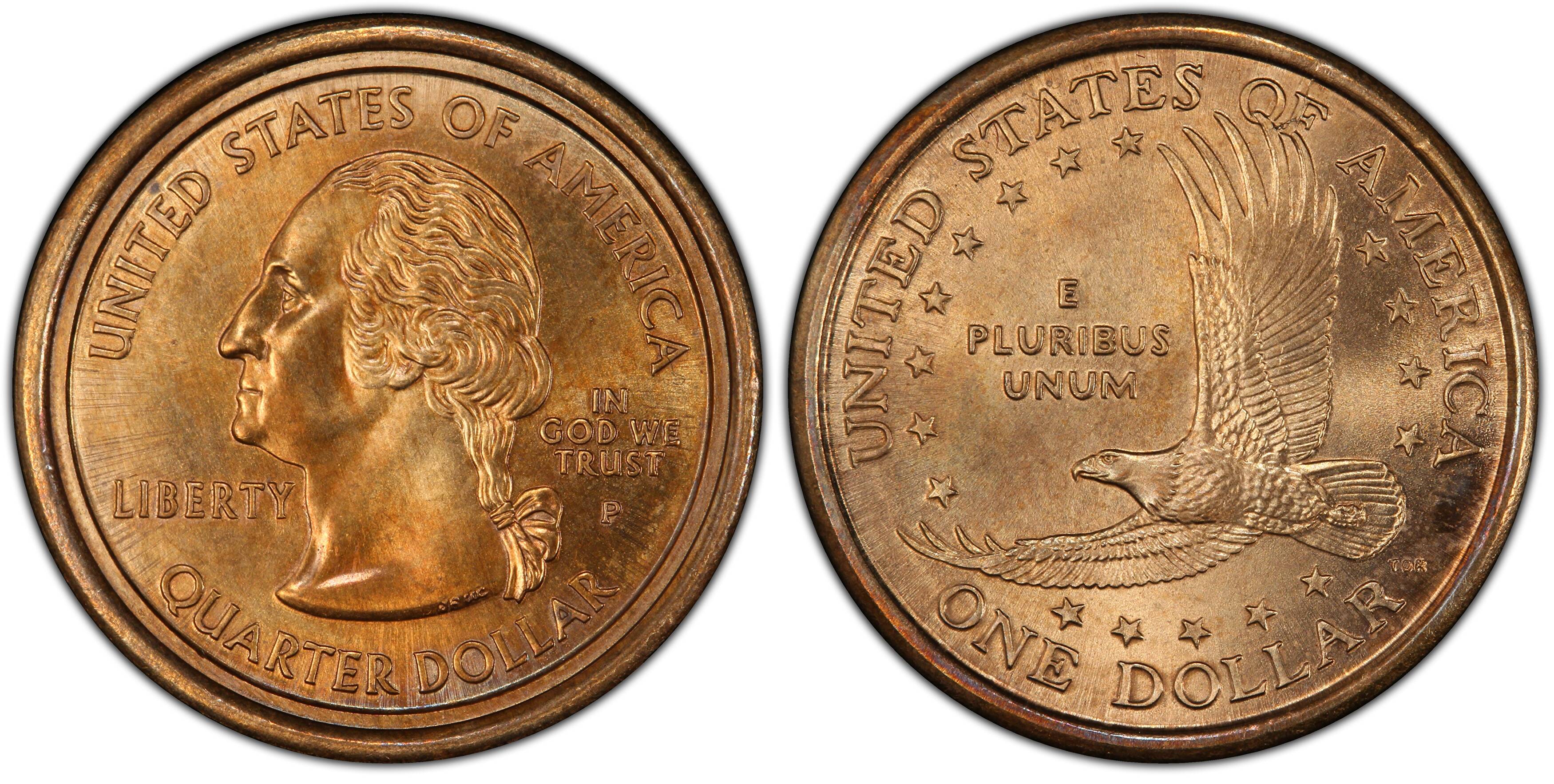
The 2000-P Sacagawea quarter mule is a real U.S. Mint error with a Washington quarter obverse and a Sacagawea dollar reverse on a dollar planchet. Certified examples are extremely rare and can sell for six figures, with PCGS reporting a $194,062 GreatCollections sale in January 2024.
The reason this coin gets so much attention is simple: it has two denominations on one coin. The front says Quarter Dollar with George Washington, while the back says One Dollar with the Sacagawea soaring eagle reverse.
This is not a normal 2000-P Sacagawea dollar, and it is not the same as the Wounded Eagle or Cheerios dollar varieties. It is a mule error, meaning two dies that were never supposed to be paired were used together on the same coin.
What Makes The 2000-P Mule Error Different?
A genuine example should have the Washington State quarter-style obverse, not Sacagawea's portrait. The reverse should show the eagle in flight used on the first Sacagawea dollar design. That mismatch is the whole story: one side belongs to a quarter, the other side belongs to a dollar.
PCGS has described it as the first authentic mule known on a regular-strike U.S. coin. PCGS also noted in 2023 that fewer than 20 specimens were known, which is why collectors treat this as one of the most famous modern mint errors.
How To Identify A Real Sacagawea Quarter Mule
What Is The 2000-P Sacagawea Quarter Mule Worth?
Because genuine examples are so rare, value depends heavily on certification, grade, eye appeal, and auction timing. PCGS CoinFacts lists the variety under PCGS number 508061 and records major six-figure auction history. PCGS also reported that a PCGS MS66 example realized $194,062 in a January 2024 GreatCollections auction.
That does not mean every unusual Sacagawea dollar is worth six figures. Most 2000-P Sacagawea dollars are common, and many online claims confuse this mule with the Wounded Eagle variety, Cheerios dollar, toning, plating, or damage.
Common Mistakes To Avoid
The biggest mistake is assuming any odd-looking golden dollar is the mule. A real mule must have the wrong obverse die, not just scratches, discoloration, rim damage, or a strange color. If the front still shows Sacagawea, it is not the quarter mule.
Another warning: do not clean the coin, test it harshly, or try to separate anything that looks unusual. A possible six-figure mint error needs professional authentication before anyone should talk seriously about value.
CoinHub tip: If you think you found this coin, weigh it, photograph both sides clearly, and compare it to certified PCGS or NGC examples. For a true Sacagawea quarter mule, professional authentication is not optional - it is the key to proving the coin is real.