
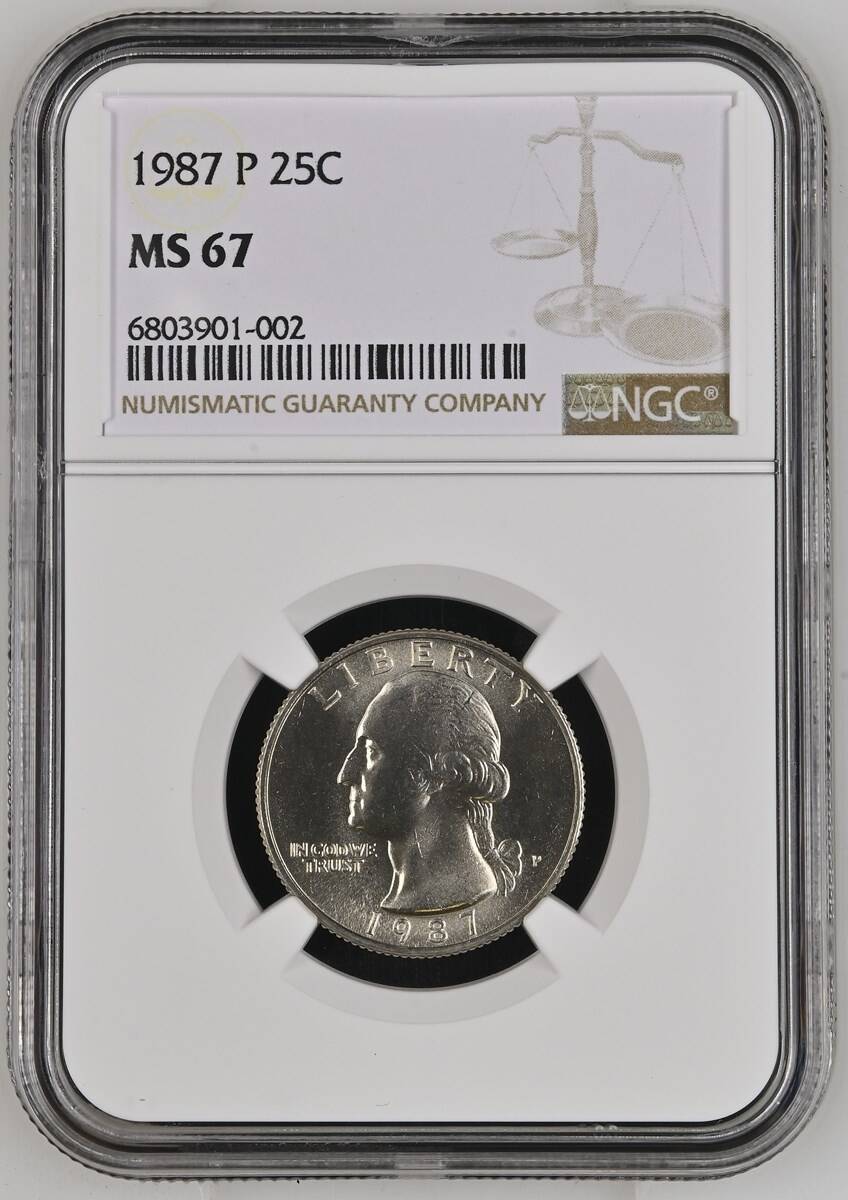
1987-P Quarter Value Guide: The Common Coin That Gets Interesting in MS67
Why the 1987-P Quarter Is Usually Common
The 1987-P Washington quarter was made for everyday circulation, not as a special commemorative or low-mintage key date. With more than 582 million struck at the Philadelphia Mint, there are still plenty of examples in change, dealer boxes, and old coin jars. That is why worn 1987-P quarters normally do not carry a major premium.
That does not make the coin worthless to collectors. It means the grade matters more than the date. For modern clad quarters, the difference between a normal circulated piece and a sharply struck, certified top-end example can be dramatic. A quarter that looks ordinary at first glance may deserve a second look if it has strong luster, clean surfaces, and very few marks.
Where Is the P Mint Mark?
Look on the obverse, the side with George Washington. The P mint mark sits to the right of Washington's hair ribbon, near the lower-right part of the portrait. On a genuine 1987-P quarter, the date appears at the bottom and the mint mark is separate from the date.
Philadelphia quarters did not always carry a P mint mark, which is why newer collectors sometimes ask whether a P is unusual. By 1987, the P mint mark was normal for Philadelphia business-strike quarters. The mint mark alone does not make the coin rare, but it helps identify the exact issue when checking values.
1987-P Quarter Value by Condition
Value depends on grade, eye appeal, and whether the coin has been certified by a major grading service. The ranges below are general collector-market guideposts, not guaranteed buy prices.
| Condition | Typical Market Picture |
|---|---|
| Circulated | Usually face value unless part of a larger collection or roll. |
| Uncirculated / raw | Often modest, commonly a few dollars when the coin has attractive luster and clean surfaces. |
| MS65 | A premium grade, but still generally accessible because many modern clad quarters survive uncirculated. |
| MS66 | More selective. Collectors start paying closer attention to marks, strike, and overall eye appeal. |
| MS67 | The grade where the coin can become meaningfully valuable. Certified MS67 examples have sold for hundreds of dollars, and exceptional auction results may vary with demand. |
Why MS67 Is the Grade Collectors Watch
Modern clad quarters were produced in huge numbers and handled in bulk. Even uncirculated coins can show contact marks, dull patches, weak luster, or small hits from bags and rolls. That is why a true MS67 quarter is not just "shiny." It has to be unusually clean for the issue.
On the 1987-P quarter, check Washington's cheek, jaw, neck, and the open fields around the portrait. On the reverse, look at the eagle's breast, wings, and the flat open areas where contact marks stand out quickly. A coin with heavy hits, dull surfaces, fingerprints, or cleaning hairlines will not be a high-grade candidate.
Should You Grade a 1987-P Quarter?
Most 1987-P quarters should not be submitted for grading. The grading fee can easily exceed the coin's value unless the piece has a realistic shot at a very high Mint State grade. Before submitting, compare your coin to certified examples and be honest about marks, luster, and strike.
- Skip grading if the coin is circulated, scratched, stained, cleaned, or heavily marked.
- Consider grading only if the coin is bright, original, sharply struck, and extremely clean.
- Use PCGS or NGC certification for any coin you plan to market as a high-grade premium example.
- Do not assume every shiny 1987-P quarter is MS67. Modern quarters can look flashy while still having too many small marks.
Errors and Varieties to Check
The 1987-P quarter is not famous for a major, widely collected variety like the 1955 doubled die cent or the 2004 Wisconsin Extra Leaf quarter. Still, collectors may pay premiums for legitimate mint errors if the error is strong enough and properly authenticated.
Look for off-center strikes, broadstrikes, clipped planchets, die cracks, and unusual but genuine mint-made problems. Be careful with damaged coins. A quarter that was scratched, squeezed, stained, or altered after leaving the Mint is damage, not a valuable error.
CoinHub Collector Tip
Bottom line: the 1987-P Washington quarter is common in normal condition, but it becomes worth studying when it is unusually clean and uncirculated. If you think you have a high-grade example, protect it from fingerprints, compare it with certified coins, and get a professional opinion before spending money on grading.
Value references change over time. Current guide data and certified-sale context were checked against PCGS CoinFacts and NGC Coin Explorer in May 2026.