
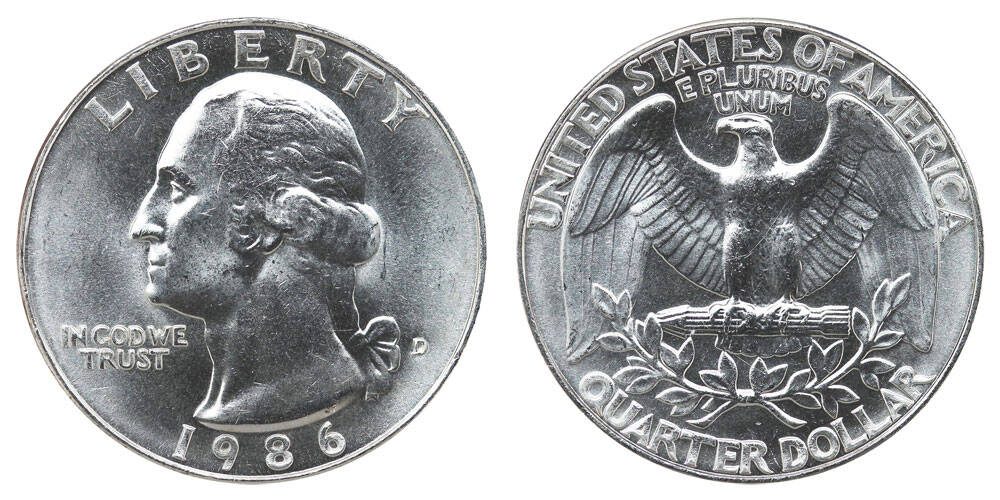
High-Grade 1986-D Quarters: Value, Errors, and What to Check
Why the 1986-D Quarter Gets Searched
The 1986-D Washington quarter is not rare in normal circulated condition. It is still searched often because people find older-looking quarters in change and wonder whether a Denver Mint coin from the 1980s has collector value.
The important answer is simple: date alone is not enough. For modern clad quarters, condition is usually the dividing line between an ordinary coin and a coin worth setting aside.
What to Look for on a 1986-D Quarter
- Strong luster: uncirculated coins should have bright original mint shine, not a dull gray circulated look.
- Clean surfaces: heavy scratches, bag marks, or rim dings can keep the coin from bringing a premium.
- Sharp detail: check Washington's hair, the eagle, and the lettering for wear or weak areas.
- Major errors only: ordinary wear, discoloration, and minor machine doubling usually do not make it valuable.
Common Mistakes With 1980s Quarters
Many customers confuse age with rarity. A 1986 quarter feels old compared with today's change, but it is still a modern clad coin. Unless it is high grade, certified, or has a significant mint error, it usually does not carry a major premium.
Also remember that 1986 quarters are not silver. Regular Washington quarters stopped being 90% silver after 1964, so a normal 1986-D quarter is copper-nickel clad.
What CoinHub Staff Should Tell Customers
- Start with condition. Ask whether the coin is circulated or truly uncirculated.
- Do not hype face-value coins. Most circulated 1986-D quarters are still worth 25 cents.
- Look for real errors. Off-center strikes, broadstrikes, wrong planchet errors, or dramatic clips deserve closer review.
- Recommend grading selectively. Certification usually makes sense only for exceptional high-grade or major-error examples.