
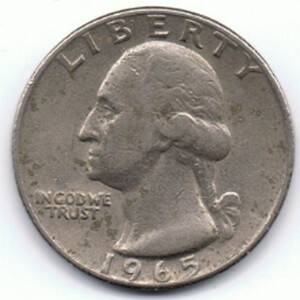
No Mint Mark, Silver Error, and What to Look For
A 1965 quarter with no mint mark is normal. Philadelphia, Denver, and San Francisco mint marks were not used on circulating U.S. coins from 1965 through 1967, so the missing mint mark is not an error by itself.
How much is a 1965 quarter worth?
Circulated 1965 quarter: Usually $0.25. - Nice uncirculated examples: Often a few dollars, depending on grade and eye appeal. - High-grade certified coins: Can bring much more, especially with strong luster and clean surfaces. - Major errors: Off-center strikes, wrong planchets, and rare transitional silver strikes are the coins to watch. The silver error everyone talks about
A normal 1965 clad quarter weighs about 5.67 grams. A 90% silver Washington quarter weighs about 6.25 grams. If a 1965 quarter weighs around 6.25 grams and has the look of silver all the way through the edge, it may deserve professional authentication.
Do not rely on color alone. Many circulated clad quarters look gray or bright. A scale is your best first step.
What to check first
Look at the edge. A normal clad quarter usually shows a copper-colored layer. - Weigh it on a digital scale that reads to 0.01 grams. - Check for off-center strikes, clips, broadstrikes, and unusual planchet errors. - Do not clean the coin. Cleaning can hurt value fast. Bottom line
The average 1965 quarter is not rare, but the year is still worth checking because of the famous silver transitional error. If your coin has the right weight or a dramatic mint error, it is worth a closer look.
CoinHub collector note
Values can change with grade, eye appeal, originality, and current collector demand. For rare coins or expensive errors, PCGS or NGC authentication is usually the safest next step before buying or selling.