
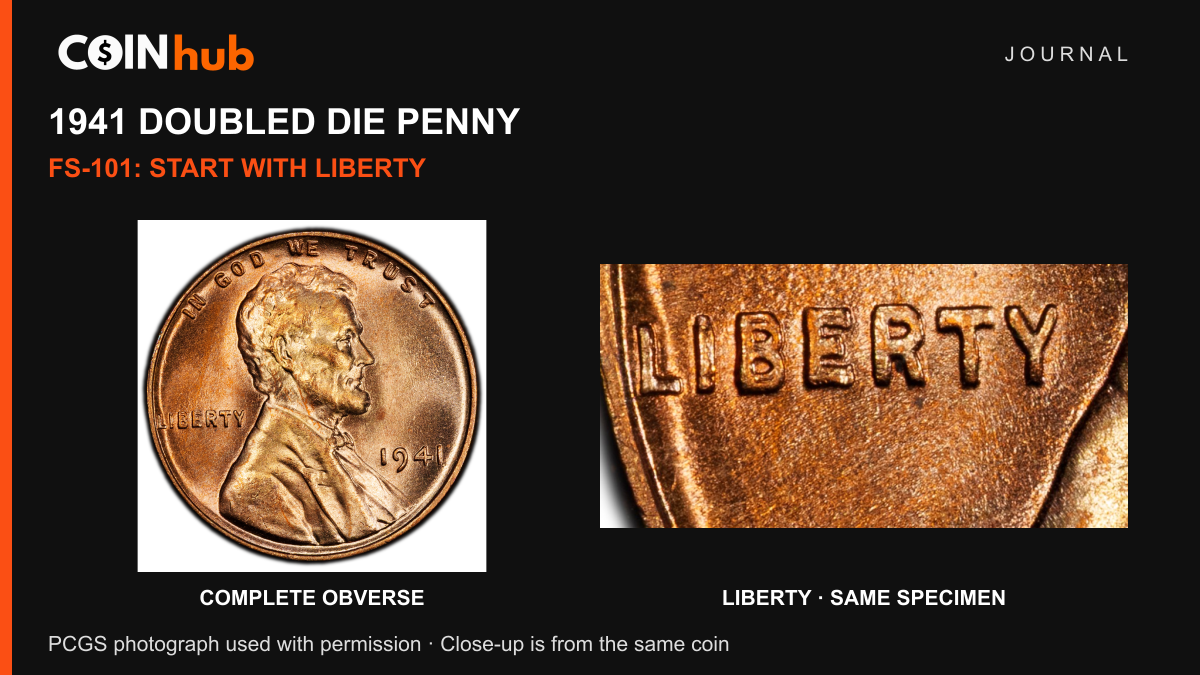
Start with LIBERTY, then compare the whole pattern
The 1941 doubled die penny called FS-101 shows extra detail at LIBERTY, with less bold doubling at TRUST and the bottom of the 4 in the date. It is a Philadelphia Lincoln cent with no mint letter below the date. A wide letter alone does not identify it.
Keep the year and FS number together. PCGS lists several 1941 doubled-die varieties, and their strongest clues differ. The genuine coin shown here is its FS-101 reference. It is not a picture of every form of doubling found on a 1941 cent.
Read three areas in the same light
A die is the steel tool that stamps a coin's design. A doubled die carries repeated design detail before it strikes the coin. DDO means doubled die obverse: the doubling is on the front, where Lincoln appears. It does not mean the cent was struck twice.
In PCGS's description of FS-101, the extra LIBERTY detail spreads above the main letters. TRUST has a smaller repeat toward the right. The lower edge of the 4 supplies another place to compare. Read these as a group rather than choosing whichever single edge looks most dramatic.
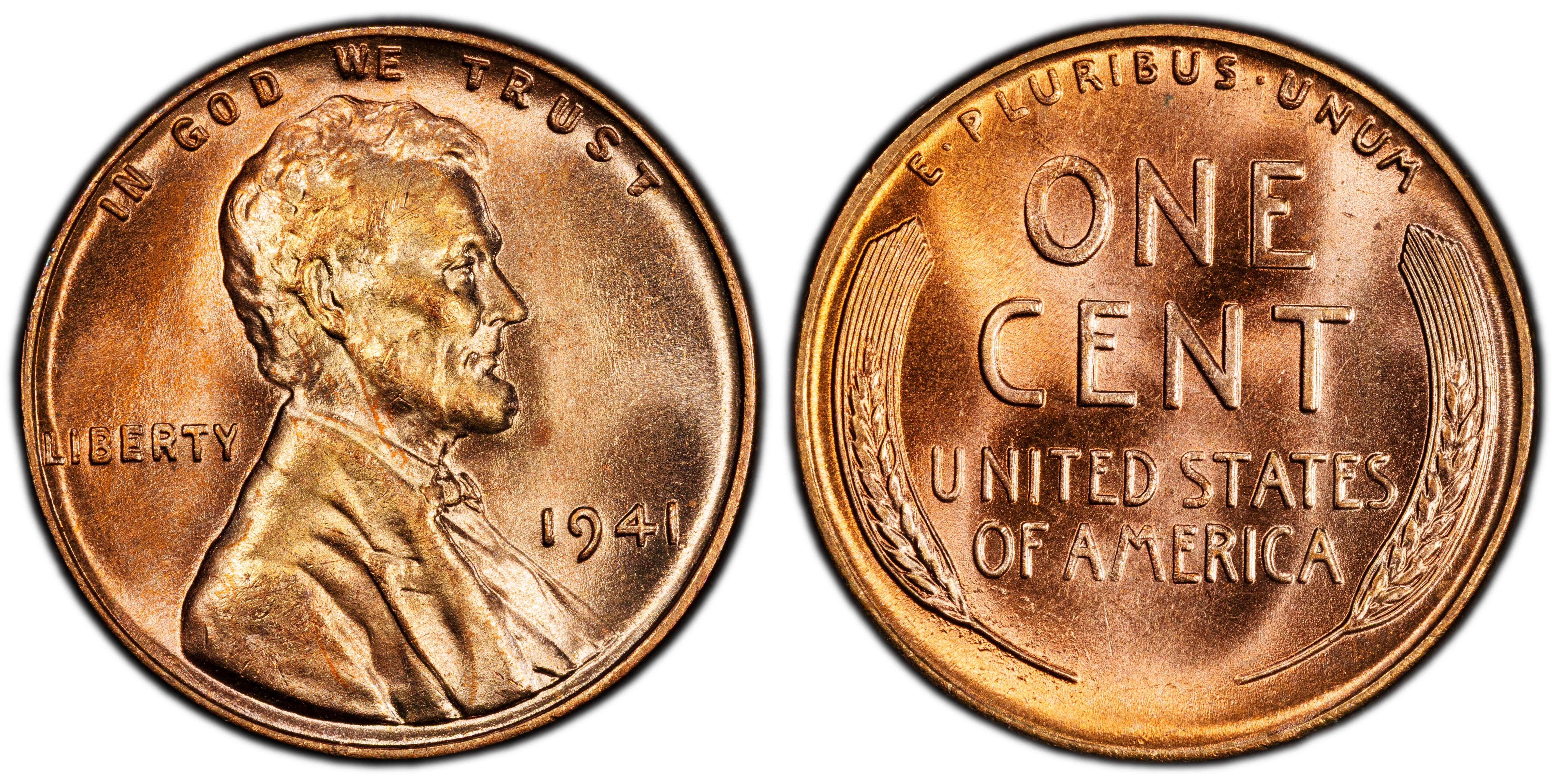
Face the coin upright and use a steady light. First compare several letters in LIBERTY. Then move to TRUST and the date without changing the coin's orientation. If glare hides a corner, take a second photo with the light moved. Save both views.
FS-101, FS-102 and FS-103 are separate labels
The FS label identifies a cataloged variety; it is not a grade. These three PCGS listings show why the full label matters. The table summarizes reference clues, not a test that can settle a worn or blurry coin.
| 1941 variety | What the PCGS reference emphasizes |
|---|---|
| FS-101 | LIBERTY is the stronger clue; compare the weaker TRUST detail and the 4. |
| FS-102 | TRUST and the W of WE show stronger doubling than in its FS-101 description. |
| FS-103 | Fainter date and TY detail, with doubling at Lincoln's earlobe. |
Do not transfer an FS number from a different year. CoinHub's 1936 FS-101 cent guide concerns another die and another pattern. An FS-101 label without a date and coin type is incomplete.
A flat shelf needs a different explanation
NGC's die-doubling comparison shows how movement during a strike can leave a low, flat shelf next to a letter. That is machine doubling. It does not establish that the die itself had a doubled design.
NGC also shows that both effects can occur on one coin. A shelf is not a reason to stop looking at the rest of the design. Compare the named variety's actual pattern, then leave uncertain areas open. A bright outline produced by glare or heavy photo sharpening is poor evidence.
Make a record before making a price claim
Keep a full photo of each face, plus close-ups of LIBERTY, TRUST and the date. Note anything that blocks the view, such as wear, a scratch or a holder edge. Avoid cleaning or rubbing the surface to reveal a second line.
Use the record to ask a qualified variety specialist or grading service about a possible match. The photograph here cannot authenticate your coin or assign its condition grade. A seller's title and asking price cannot do that either. Compare dated sales only after the issue, variety and condition are established.
For broader reading, CoinHub founder Blake Alma's The CoinHub: An Ultimate Guide to Coin Errors is an optional resource from CoinHub's own author. The reference photographs remain the starting point for this specific variety.
Sources and photograph checked October 28, 2026. PCGS photograph used with CoinHub's saved permission; original color and coin details retained. CoinHub added labels, proportional framing and an identified close-up. No current value, population or survival estimate is asserted.