
1922 No D Lincoln Cent FS-401: How To Spot The Valuable One
Why The 1922 No D Penny Is Special
Unlike many no-mint-mark cents, the 1922 No D is not a Philadelphia issue. Denver was the only mint that struck Lincoln cents for circulation in 1922, so every normal 1922 cent should show a small D below the date.
PCGS describes the 1922 No D Lincoln cent as the only circulation-strike coin in the Lincoln cent series missing its intended mint mark. That is why collectors treat it as a major wheat cent variety instead of a minor oddity.
How To Identify The Strong Reverse Variety
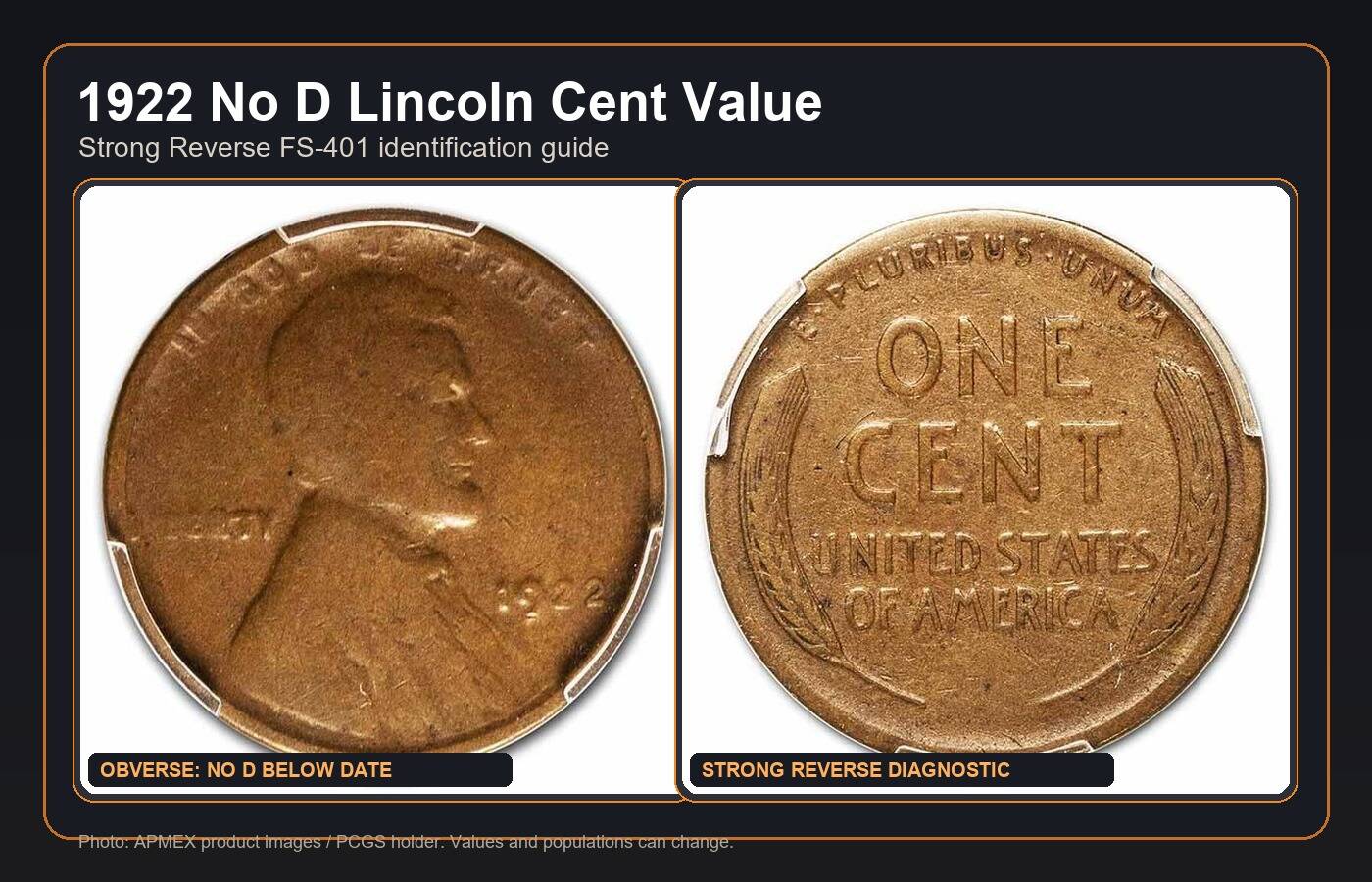
The expensive coin most collectors want is the Strong Reverse, FS-401 variety. APMEX notes that this die pair has a weak obverse strike, a stronger second 2 in the date, and a well-defined word TRUST. PCGS also points to a sharp reverse as a key diagnostic.
- The D mint mark below the date should be missing, not just covered by damage.
- The second 2 in 1922 should look stronger than the first 2.
- TRUST should be clear for the grade.
- The reverse should be strong, with crisp wheat ears and lettering for the amount of wear.
What Is A 1922 No D Penny Worth?
Values vary widely by variety, grade, color, eye appeal, and certification. Lower-grade certified Strong Reverse examples can still bring serious money, while high-end mint-state coins can reach five figures. PCGS lists an auction record of $49,450 for a red MS65 Strong Reverse example.
The Weak Reverse and Weak D varieties are also collectible, but they normally do not command the same premium as the Strong Reverse FS-401. That is why the diagnostic details matter before calling a coin the rare version.
Do Not Guess On This Coin
A worn 1922-D cent, a weak D, a damaged mint mark, or an altered coin can look tempting at first glance. Because the real Strong Reverse is valuable, altered examples and misattributed coins are a real risk.
If you think you have one, compare the date, TRUST, and reverse strength, then consider PCGS or NGC authentication. For more varieties to check, see CoinHub's penny error list.
Sources: PCGS CoinFacts and APMEX product notes. Values and population data can change as new coins are certified and sold.