
How Much Is a 1901-S Barber Quarter Worth?
Why the 1901-S Barber Quarter Is So Important
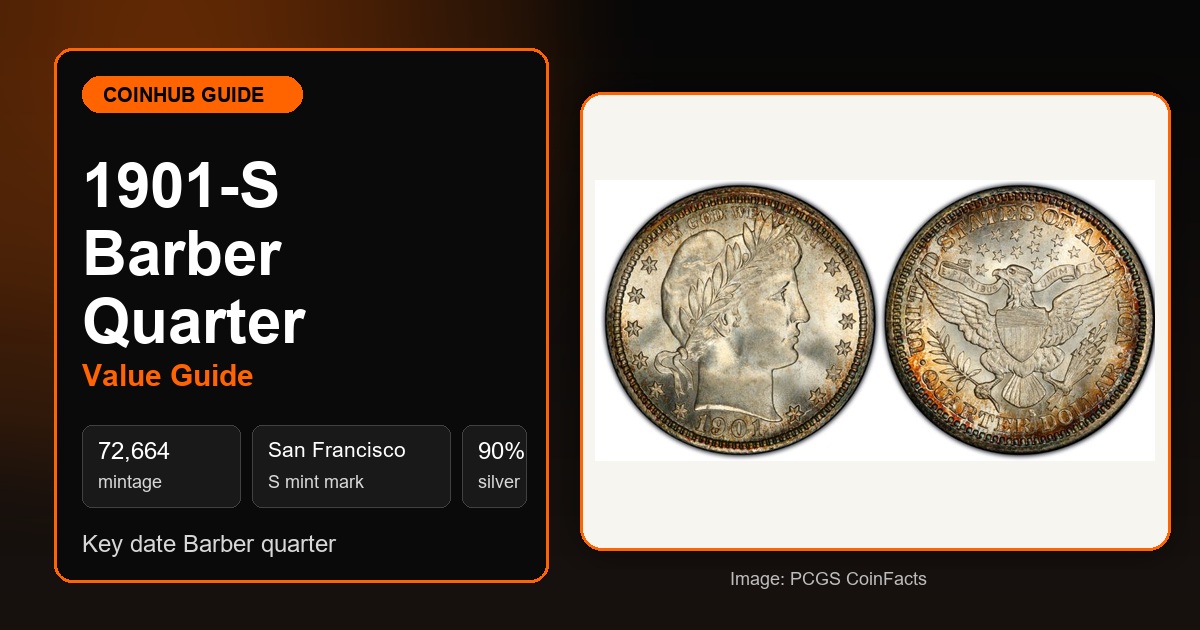
The 1901-S Barber quarter is the coin many collectors think of first when the Barber quarter series comes up. It was struck at the San Francisco Mint with a mintage of only 72,664 pieces, and it entered circulation at a time when most collectors were not saving branch-mint coins by date and mint mark. That combination created a brutal survival problem: many examples wore down hard before anyone realized how scarce the coin would become.
PCGS lists the issue as a San Francisco Barber quarter designed by Charles E. Barber, with a reeded edge, 24.3 mm diameter, and 90% silver, 10% copper composition. Stack's Bowers also treats the coin as the prime rarity among circulation-strike Barber quarters, noting that very few Mint State examples are believed to survive. For collectors, that means the 1901-S is not just another old silver quarter. It is a true series key.
How To Identify a 1901-S Barber Quarter
Start with the date on the obverse. The coin should clearly read 1901 below Liberty's bust. Then flip the coin over and look below the eagle, just above the words QUARTER DOLLAR. A genuine San Francisco coin will have an S mint mark in that area.
Because the 1901 Philadelphia quarter is much more common, the 1901-S has long attracted altered coins with added mint marks. The Barber Coin Collectors' Society warns that authentication depends on matching the genuine date and mintmark positions, not simply seeing an S on the reverse. If the mint mark looks too sharp for the rest of a worn coin, sits in the wrong place, or does not match known genuine dies, treat it with caution.
1901-S Barber Quarter Value by Grade
Values change with the rare coin market, but the 1901-S is valuable in essentially every collectible grade. Published retail guide levels in mid-2026 show low-grade examples commonly in the thousands of dollars, Good-grade coins moving higher, Fine and Very Fine examples often reaching five figures, and Extremely Fine to About Uncirculated coins stretching into the tens of thousands. Mint State examples are major auction coins, not casual album fillers.
The jump from one grade to the next can be dramatic. A coin graded AG-3, G-4, VG-8, F-12, VF-20, or XF-40 is not just a little different on paper; each step may represent noticeably sharper detail and a very different buyer pool. Surface quality also matters. Cleaning, scratches, rim damage, corrosion, or an old repair can reduce value even when the date and mint mark are real.
Specs Collectors Should Know
- Designer: Charles E. Barber.
- Mint: San Francisco.
- Mintage: 72,664.
- Composition: 90% silver and 10% copper.
- Diameter: 24.3 mm.
- Weight: about 6.25 grams for a standard silver quarter, with normal tolerance and wear affecting worn coins.
- Edge: reeded.
Should You Grade a 1901-S Barber Quarter?
If you believe you have a real 1901-S Barber quarter, professional authentication is usually worth serious consideration. This is not the kind of coin where a quick online opinion should decide the final value. PCGS, NGC, CACG, or another respected grading service can help confirm authenticity, grade, surface condition, and whether the coin has been cleaned or altered.
For a raw example, do not clean it, polish it, test the surface with chemicals, or try to improve the appearance. Put it in a non-PVC holder and have the coin reviewed by a reputable dealer or grading professional. The difference between a genuine key date, an added-mintmark fake, and a damaged but real coin can be thousands of dollars.
Sources consulted include PCGS CoinFacts, Stack's Bowers Coin Resource Center, Numista/Greysheet retail guide data, and the Barber Coin Collectors' Society authentication notes.