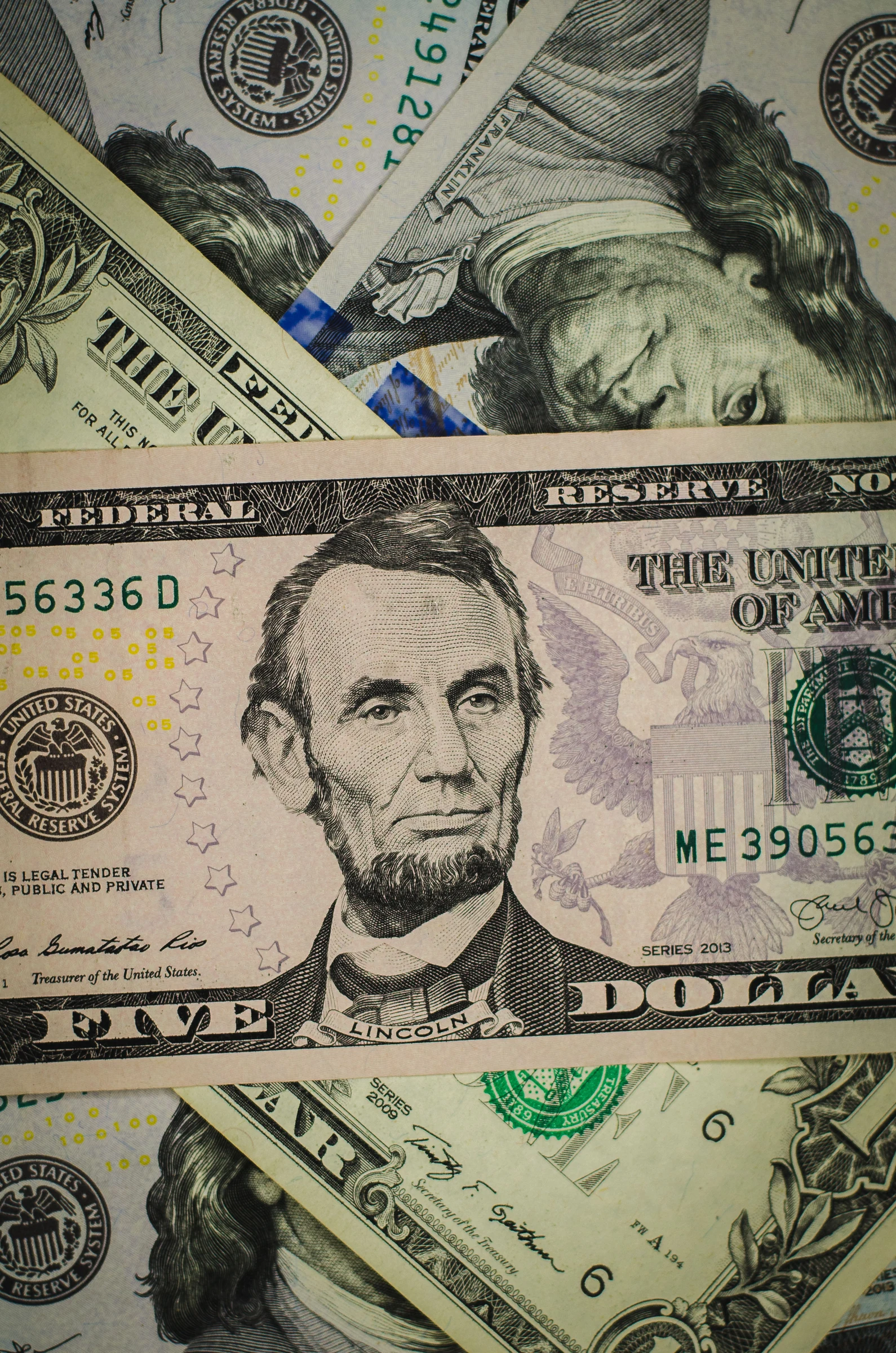
Printed folds and foldovers
A printed fold can happen when a sheet folds between printing steps. A folded corner or flap may catch ink meant for another area. When that paper is opened, part of the design can appear on the wrong side.
The useful clue is where the ink went. A seal or part of a serial number on the back can help show the fold's effect. A crease made after printing does not put serial-number ink on the back.
The Series 1995 $5 on CoinHub's list has the Treasury seal and much of the right serial number on the back. Graded PMG 65 EPQ, it sold at Heritage for $1,440 on May 6, 2022. That is one historical result, not today's value for another folded bill.
Gutter folds
A gutter fold occurs when a strip of paper is folded before ink reaches that area. Opened paper can show a blank gap through the design. The gap follows the fold rather than the normal layout of the note.
Look at both sides. A fold may affect one printing step or more than one. Do not assume every gutter fold must interrupt both sides. The unaffected parts can help show when the fold was present.
CoinHub's $5 list includes a Series 1999 gutter fold graded PMG 64 EPQ. No sale price is quoted for that specimen. The date alone does not mean that other 1999 notes have an error.
An ordinary crease is different
A bill can become folded during everyday use. That bend alone is not a printing mistake. Wear, stains and other damage can also make a note look unusual.
Ask what happened to the design. Is there an unprinted strip? Is part of a seal on the wrong side? Or does the image continue through an ordinary bend? Those are different observations, not a complete test of authenticity.
A missing patch of ink alone is not enough to name the cause. If the evidence is unclear, keep the error unconfirmed. Do not turn a crease into a value claim.
PMG is a grading service. EPQ means Exceptional Paper Quality. The note's condition and the error's size matter when comparing values. Keep the complete assigned grade with any past sale. Return to the short $5 bill error list, or compare errors in seals and serial numbers.